Physical Address
Los Angeles, CA, United States
Physical Address
Los Angeles, CA, United States

The Pet Tech Gazette | Discover the Future of Pet Tech.
The Pet Tech Gazette | Discover the Future of Pet Tech.
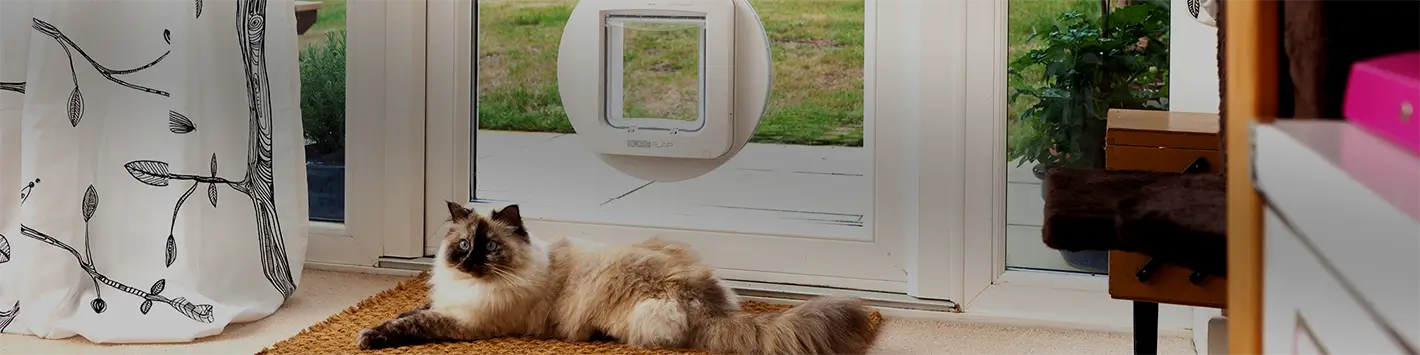
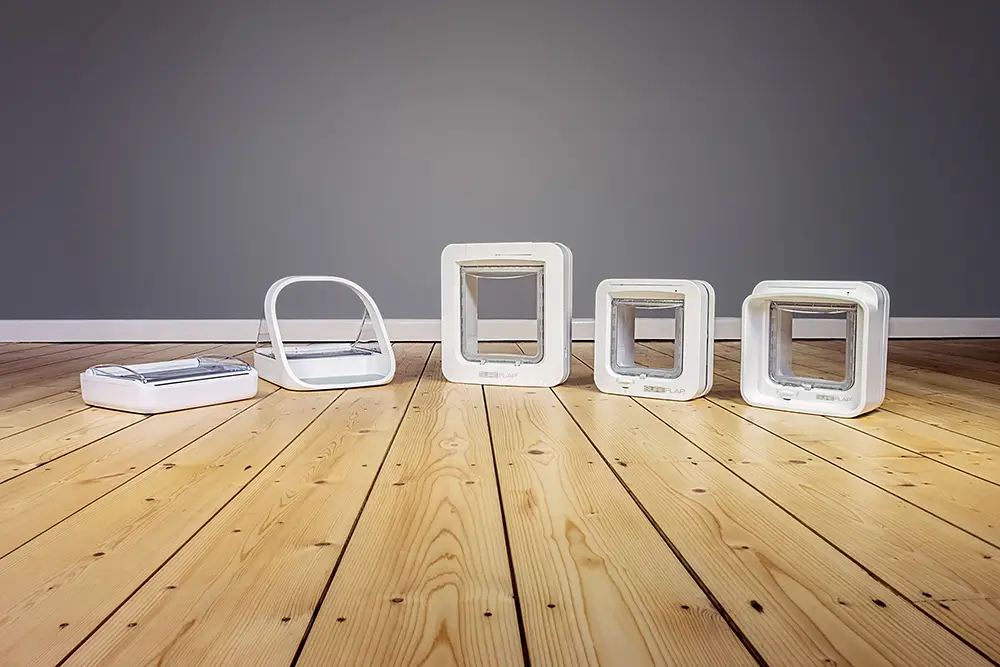
A standard pet flap gives cats and dogs more freedom, but it may also create an easy entrance for neighborhood cats and other unwanted animals.
A microchip pet door attempts to solve this problem by unlocking only when it recognizes an authorized pet. Instead of requiring a magnetic collar key, compatible models can read the identification microchip already implanted under a pet’s skin.
One of the best-known premium options is the SureFlap Microchip Pet Door Connect. It combines microchip-controlled entry with smartphone notifications, activity records, remote locking and scheduled curfews.
However, the complete system can be expensive, particularly when the Hub and installation accessories are added.
In this research-based SureFlap Microchip Pet Door Connect review, we examine its official specifications, smart features, installation requirements, strengths and limitations to determine whether it deserves to be considered the best microchip pet door for large cats and small dogs.
Quick verdict: The SureFlap Microchip Pet Door Connect is a strong choice for owners who regularly deal with unwanted animal visitors and want app-based access controls. It is less attractive for people who only need a basic microchip door or do not want to pay extra for connected features.
Editorial Disclosure: TechPetly has not physically tested this product. This review is based on official product specifications, support documentation, installation guides and publicly available customer feedback. Some links may be affiliate links.
| Feature | Specification |
|---|---|
| Best suited for | Large cats and small dogs |
| Access method | Compatible implanted microchip or SureFlap RFID collar tag |
| Stored pet identities | Up to 32 |
| Smartphone app | Yes |
| Hub required | Yes, for connected features |
| Entry and exit notifications | Yes |
| Remote locking | Yes |
| Scheduled curfew | Yes |
| Power source | Four C-cell batteries |
| Advertised battery life | Up to six months |
| Installation options | Doors, walls and glass |
| Flap opening | Approximately 178 × 170 mm |
Sure Petcare describes the model as suitable for large cats and small dogs. Its connected functions include activity notifications, remote controls and scheduled curfews through the Sure Petcare app. The manufacturer states that it runs on four C-cell batteries with a battery life of up to six months.
A microchip pet door contains a scanner that reads a compatible identification microchip implanted under a pet’s skin.
When an authorized pet approaches from outside, the scanner reads its identification number and releases the electronic lock. An animal whose identity has not been registered should encounter a locked flap.
This differs from three common alternatives:
A standard flap opens whenever an animal pushes against it. It is inexpensive and simple, but it does not distinguish between your pet and an unfamiliar animal.
These doors unlock when they detect a magnetic key attached to the pet’s collar. They can restrict access, but the pet must continue wearing the correct collar accessory.
A compatible implanted microchip acts as the pet’s identification key. Some models also support an RFID collar tag for animals without a compatible microchip.
Sure Petcare states that its microchip pet doors are designed to prevent unregistered animals from entering by recognizing an authorized pet’s existing identification microchip.
The SureFlap door contains a microchip scanner inside its tunnel.
Before normal use, the owner places the door into learning mode and encourages the pet to put its head into the tunnel. The door reads and stores the pet’s microchip number.
After registration, the process works as follows:
The door supports common 9-, 10- and 15-digit identification microchips and can remember registered identities after its batteries are replaced.
The connected functions do not operate through the pet door alone.
The Sure Petcare Hub acts as a bridge between the door, the owner’s router and the Sure Petcare app. It connects to an available Ethernet port on the router and communicates wirelessly with compatible Sure Petcare devices.
Once connected, owners can use the app to:
The door can still provide basic microchip-controlled access without app monitoring, but buyers purchasing the Connect model primarily for its smart features should include the Hub in their total budget.
Some product packages include the Hub, while others sell it separately. Buyers should check the exact bundle before ordering.
Every interaction with the connected door can be recorded in the Sure Petcare app.
The owner can receive a notification when a registered cat or dog enters or leaves. This can be useful for people who want to know whether a pet is currently outside while they are working, travelling or preparing to leave home.
The app also builds an activity history. Owners may use this information to notice changes in a pet’s normal pattern.
For example, a cat that normally uses the door several times a day but suddenly remains inside may deserve closer observation.
However, the app is not a veterinary diagnostic tool. A change in door activity can have many explanations, including weather, routine changes or temporary preferences. Persistent changes in appetite, movement or behaviour should be discussed with a veterinarian.
Sure Petcare says that the Connect system allows owners to monitor their pets’ activity and receive updates when they interact with the door.
The scheduled curfew is one of the strongest reasons to choose the Connect version instead of the standard model.
Owners can select a time for the door to restrict outgoing access at night and another time for it to reopen in the morning.
This may be useful for households that prefer to keep their pets indoors overnight because of:
The door can also be controlled remotely through the app. An owner could change its status after leaving home instead of returning to adjust a physical lock.
Sure Petcare officially lists scheduled locking and remote app control among the Connect model’s main features.
The SureFlap system is designed to allow recognized pets to enter while preventing unregistered animals from opening the flap from outside.
This makes it potentially useful for homes experiencing visits from:
However, no pet flap should be described as completely wildlife-proof, burglar-proof or impossible to force open.
The product is best understood as an animal access-control device, not a replacement for a conventional home-security system.
Installation quality also matters. A poorly fitted frame, damaged flap or unsuitable mounting location may reduce the effectiveness of the system.
The SureFlap Microchip Pet Door Connect is larger than the company’s Microchip Cat Flap Connect.
Its flap opening is approximately:
178 mm wide × 170 mm highThe tunnel depth is approximately:
70 mmSure Petcare positions the product for large cats and small dogs.
Breed labels alone should not determine whether the door is suitable. Two dogs of the same breed can have different shoulder widths and body shapes.
Before purchasing:
Broad-chested, overweight or unusually tall dogs may not fit even when their breed is normally considered small.
A suitable wooden door is normally the most straightforward installation location.
The general process involves:
This still requires confidence with measuring, drilling and cutting.
An incorrectly positioned opening is difficult to reverse. Anyone who is not comfortable cutting an exterior door should budget for professional installation.
Glass installation is more complicated.
Tempered and double-glazed panels generally cannot be safely cut after manufacturing. A glazier may need to produce a replacement panel with the correct circular opening already prepared.
The SureFlap Pet Door Mounting Adaptor is required for many glass installations. Official specifications indicate that the adaptor is designed for circular openings approximately 294–320 mm in diameter.
The total cost may therefore include:
For some homes, the installation may cost as much as or more than the product itself.
The pet door can also be installed through a suitable wall.
Wall installation may require proprietary tunnel extenders. Each extender adds approximately 50 mm to the tunnel length, and multiple units can be combined for thicker walls.
Additional work may include:
This is usually the least suitable option for inexperienced DIY users.
The Connect model uses four C-cell batteries.
Sure Petcare advertises battery life of up to six months, although actual performance can vary according to:
The official figure should therefore be treated as a maximum estimate rather than a guaranteed replacement interval.
Regular maintenance should include:
The stored pet identities remain in memory when the batteries are changed.
A microchip reader requires a brief period to detect the chip and release the lock.
Most animals naturally pause as they place their head into the tunnel. However, a nervous or fast-moving pet may initially push the flap before the locking mechanism has finished responding.
This does not necessarily mean the product is defective. The pet may need time to associate the sound of the lock with permission to move through the flap.
Training should be gradual:
Some pets may adapt within days, while timid animals may require considerably longer.
Sure Petcare also sells a standard Microchip Pet Door without the complete app-connected ecosystem.
The standard model may be the better value when the buyer only wants:
The standard version is advertised with battery life of up to 12 months, compared with up to six months for the Connect model.
Choose the Connect version when you will genuinely use:
Paying more for the Connect model makes little sense when the app will rarely be opened.
The SureFlap Microchip Pet Door Connect is most suitable for:
It may not be the right choice for:
The SureFlap Microchip Pet Door Connect combines three useful functions:
That combination makes it one of the more capable choices for owners of large cats and small dogs.
Its main weakness is not necessarily performance, but total ownership cost. The door, Hub, batteries, installation accessories and professional labour can turn it into a substantial home-improvement purchase.
For owners dealing with persistent animal intrusions or needing automatic nighttime restrictions, those connected features may justify the cost.
For someone who only wants to keep unfamiliar cats outside, the standard SureFlap Microchip Pet Door may provide better value.
The SureFlap Microchip Pet Door Connect is a premium smart pet door designed for large cats and small dogs.
Its microchip-controlled lock can help prevent unregistered animals from entering, while the app provides notifications, activity records, remote controls and scheduled curfews.
The product appears most valuable for households that will actively use those smart features. Buyers should carefully calculate the complete project cost before ordering, especially when installation involves glass or a thick wall.
Based on its official features and documentation, it is a strong candidate for the best microchip pet door for owners who prioritize connected controls.
It is not automatically the best option for every buyer. Budget-conscious owners and those who only need selective entry should also consider the non-Connect model.
Check the latest price, Hub bundle and installation accessories before purchasing.
A pet with a compatible implanted microchip does not need to wear a collar key. An RFID collar tag can be used for pets without a suitable microchip.
SureFlap pet doors in this range can store multiple registered identities, with official documentation listing support for up to 32 pets.
The Hub connects to an available Ethernet port on the home router and acts as the link between the pet door and the internet.
Yes, but a compatible mounting adaptor and a professionally prepared glass panel may be required.
Yes, although tunnel extenders and professional cutting or weatherproofing work may be necessary.
Sure Petcare advertises battery life of up to six months for the Connect model using four C-cell batteries. Actual battery life may be shorter depending on usage.
No. The app records door-related activity, but it does not replace veterinary diagnosis. The data may only help owners notice changes in a pet’s routine.
The lock is designed to prevent unregistered animals from entering, but no pet door should be guaranteed as completely wildlife-proof under every condition.